
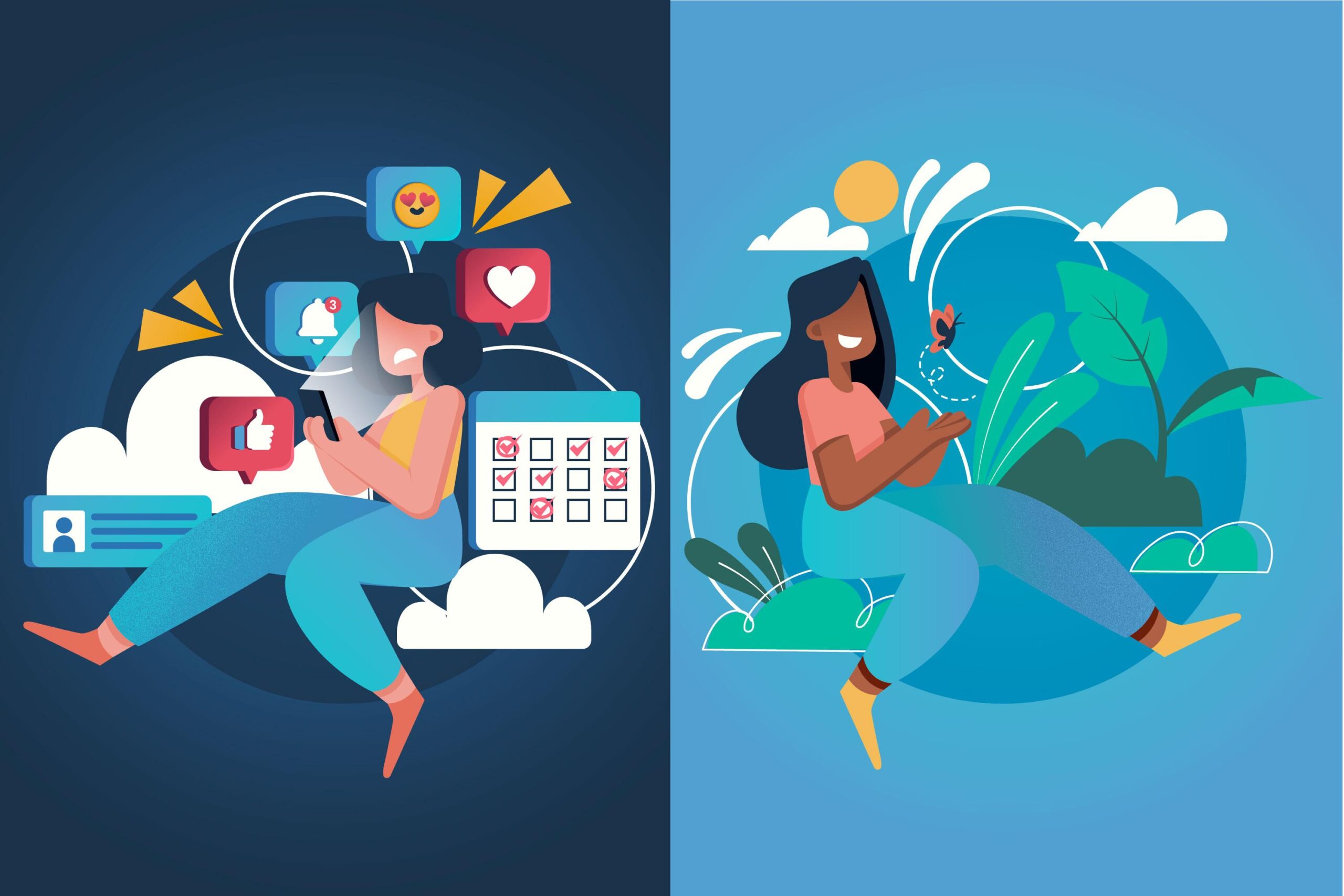
Most of us check social media without thinking. A quick scroll turns into 30 minutes. Notifications interrupt work. Comparison creeps into our mindset. Over time, it quietly eats into focus, confidence, and mental clarity.
That’s why many people are trying a 30-day social media detox to see what happens when they step away from constant scrolling.

So what really happens when you quit social media for 30 days? Do you become more productive? Does your mental health improve? Or does nothing change at all?
This guide breaks down the real effects, backed by research, my real experiences, and my practical advice so you can decide if a digital detox is worth trying.
Why People Are Quitting Social Media
Social platforms are designed to keep users engaged for as long as possible. Likes, comments, endless feeds, and notifications trigger dopamine in the brain. Over time, this creates habit loops that feel hard to break.
Common reasons people quit social media include:
- Feeling mentally exhausted or overstimulated
- Constant comparison with others
- Reduced attention span and productivity
- Sleep problems from late-night scrolling
- Desire for more meaningful offline life
For many, quitting social media is less about avoiding technology and more about regaining control over time and focus.
What Research Says About Taking a Social Media Break
Studies suggest that reducing or stopping social media usage can improve emotional well-being for many users, especially those who feel anxious, stressed, or overwhelmed.
Some research shows that limiting social media can help reduce anxiety, depressive symptoms, and sleep disturbances. Less exposure to negative news cycles and comparison-based content often leads to better mood regulation.

However, not everyone experiences dramatic changes. Some people feel neutral or only small improvements. The outcome depends on personal habits, work requirements, and how the freed-up time is used.
The key takeaway: quitting social media does not magically fix everything, but it often creates space for healthier routines.
What Happens During a 30-Day Social Media Detox
Week 1: Habit Withdrawal
The first few days usually feel uncomfortable. You may instinctively reach for your phone. Boredom and restlessness are common. Some people experience mild anxiety because the brain is adjusting to less stimulation.
This phase passes quickly.
Helpful tips:
- Keep your phone in another room while working
- Replace scrolling with short walks, reading, or music
- Avoid reinstalling apps “just to check once”
Week 2: Improved Focus and Calm
Once the habit weakens, concentration improves. Many people notice they can complete tasks without constant distraction. Time feels slower in a good way. Your mind becomes less scattered.
You may also start sleeping better because your brain is no longer stimulated late at night.
Week 3: Emotional Reset
This is when comparison starts fading. Without seeing highlight reels of other people’s lives, self-esteem stabilizes. Anxiety often decreases. Thoughts become clearer and less reactive.
You begin noticing what truly matters to you instead of reacting to online trends.
Week 4: Lifestyle Shift
By the final week, many people feel more grounded. Real conversations feel richer. Productivity increases naturally. Hobbies reappear. Even small daily routines feel more intentional.
Some people decide to permanently reduce their social media usage after this phase.
Benefits of Quitting Social Media for 30 Days
1. Better Mental Clarity
Without constant digital noise, the brain has space to think deeply. Decision-making improves. Overthinking reduces. Many users report feeling mentally lighter and calmer.
2. Improved Sleep Quality
Late-night scrolling disrupts sleep cycles. Quitting social media often leads to deeper and more consistent sleep, which improves energy levels and mood.
3. Increased Productivity
Fewer interruptions mean longer focus blocks. Whether you work remotely, study, or create content, productivity improves when distractions disappear.
4. Stronger Real-Life Relationships
You become more present during conversations. Eye contact improves. Listening becomes easier. Relationships feel more meaningful without constant phone interruptions.
5. Reduced Anxiety and Comparison
Social media often creates unrealistic expectations. Stepping away reduces comparison and FOMO, allowing you to appreciate your own progress.
6. More Free Time
Most people underestimate how much time they spend scrolling. Removing social apps frees up hours each week for learning, fitness, rest, or creativity.
My Real Experience After Quitting Social Media for 30 Days
- I started feeling much calmer and more focused after the first week. My mind wasn’t constantly distracted by notifications or endless scrolling.
- My sleep quality improved significantly. I fell asleep faster and woke up feeling more refreshed without late-night screen time.
- I gained better control over my phone usage. I stopped checking my phone compulsively and used it only when necessary.
- I had more meaningful offline interactions. Conversations felt deeper, and I was more present with people around me.
- I felt more motivated to pursue personal goals, whether it was improving productivity, learning new things, or focusing on self-growth.
Common Myths vs Reality About Quitting Social Media
| Myth | Reality |
|---|---|
| Quitting social media will instantly change your life | A 30-day social media detox helps build awareness and healthier habits over time. The benefits grow gradually, not overnight. |
| You’ll feel disconnected from everyone | Most people actually feel more connected through real conversations, calls, and face-to-face interactions. |
| You’ll suddenly become ultra-productive | Productivity improves only if you intentionally use the extra time for meaningful activities. |
| Social media is the only way to stay informed | News websites, newsletters, podcasts, and direct sources provide cleaner and more reliable information, so subscribe! |
| Everyone will forget about you | Strong relationships continue outside social platforms. Social media rarely defines real connections. |
| You’ll miss important opportunities | Most serious opportunities still arrive through email, messaging apps, or direct communication. |
| It’s impossible to quit because it’s addictive | The first few days are difficult, but habits weaken quickly when apps are removed and replaced with healthier routines. |
How to Successfully Do a 30-Day Social Media Detox
Step 1: Delete the Apps
Remove all social apps from your phone. This reduces impulsive checking.
Step 2: Set Clear Rules
Decide whether browser access is allowed or fully blocked.
Step 3: Replace the Habit
Have alternatives ready such as books, podcasts, exercise, or journaling.
Step 4: Track Your Progress
Write daily observations about mood, focus, and sleep.
Step 5: Reintroduce Mindfully
After 30 days, reinstall only what truly adds value.
Common Mistakes to Avoid
- Replacing social media with excessive YouTube or binge-watching movies or series
- Checking notifications through browsers
- Not filling the extra time with healthy activities
- Expecting instant life transformation
A detox works best when paired with intentional habits.
Is Quitting Social Media Worth It?

A 30-day break from social media can reset your attention, improve emotional balance, and help you reconnect with real priorities. You don’t need to quit forever. You just need to experience life without constant digital noise at least once.
If you’re curious, start today. Your mind will thank you.
Read Next: Tech Myths Everyone Still Believes in 2026 (Truth Explained)
Frequently Asked Questions (FAQs)
What happens when you quit social media for 30 days?
Most people experience improved focus, better sleep, reduced anxiety, and more free time. Initial withdrawal may occur during the first week.
Is quitting social media good for mental health?
For many users, yes. Reducing social media usage can lower stress, comparison, and emotional overload.
Can quitting social media improve productivity?
Yes. Fewer distractions allow deeper concentration and better task completion.
Will I lose touch with people if I quit social media?
Not necessarily. Many people communicate more directly through calls, messages, or real-world interactions.
How long does it take to break social media addiction?
Most users notice habit reduction within 7 to 14 days of stopping.



Leave a Reply