
ElevenLabs is quietly making one of its boldest moves yet — stepping into AI-generated music with a new iOS app called ElevenMusic as the company prepares for what its CEO believes is an inevitable shift in the industry.

Speaking at TechCrunch Disrupt last year, CEO Mati Staniszewski said audio models will eventually become “commoditized,” with only minor differences between competitors. That raises a critical question: what comes next?
ElevenMusic may be the answer.
From voice to full creative platform
The new app, which appeared on the App Store ahead of its April 1, 2026 release, signals a clear transition. ElevenLabs is no longer just a voice AI company — it is positioning itself as a full-stack creative platform.
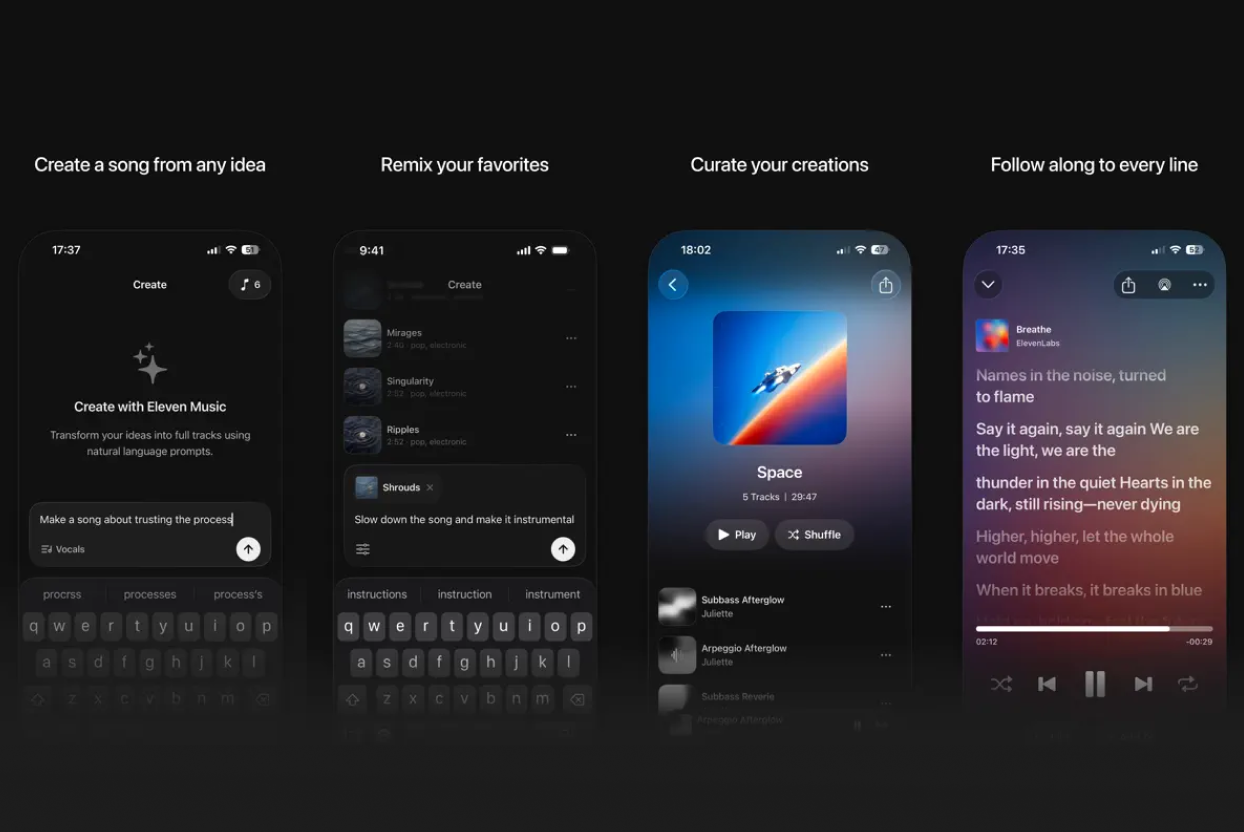
ElevenMusic allows users to generate complete music tracks using simple text prompts, including vocals, melodies, and instrumentals. Users can also remix tracks created by others, organize them into albums, and enable discovery within the platform.
The app’s description highlights its accessibility:
“Turn inspiration into music with easy-to-use creation tools… shape melodies, vocals, and instrumentals to build original tracks that reflect your style.”
This mirrors a strategy ElevenLabs has used before — build the model first, release APIs for developers and businesses, and then launch consumer-facing apps.
Competing with Suno and Udio
With this launch, ElevenLabs is entering direct competition with AI music platforms like Suno and Udio, both of which have gained traction for generating full songs from prompts.
But ElevenLabs is taking a broader approach.
The app combines creation + streaming + discovery, offering:
- AI music generation with vocals
- Remixing capabilities
- Album creation tools
- Discovery features within the app
It is designed to feel closer to platforms like Spotify and Apple Music, rather than just a standalone AI tool.
A familiar playbook — now applied to music
ElevenLabs has followed a consistent product strategy:
- Build core AI models
- Launch APIs for developers and enterprises
- Release consumer apps to scale usage
This approach worked with its voice generator and later with its reading platform, where users can listen to AI-narrated content.
Last year, the company expanded its ecosystem by allowing authors to publish audiobooks and earn royalties based on listener engagement. According to Staniszewski, ElevenLabs has already paid over $11 million to creators who contributed voices to its platform.
There is strong indication that music could follow the same path — potentially introducing royalties or incentives for creators.
Deep push into music and creative tools
ElevenLabs’ move into music didn’t happen overnight.
- It launched its first music-generation tools last year
- Its earlier sound effects model already supported basic instrumental generation
- It introduced advanced features like APIs and stem separation (isolating drums, bass, guitar, etc.)
- It hired industry talent, including Derek Cournoyer from Kobalt, to lead its music strategy
To showcase its capabilities, the company released ElevenAlbum, featuring artists and producers such as:
- Art Garfunkel
- Liza Minnelli
- Demitri Leiros
- Angelbaby
- Sunsetto
The company claims its tools are designed to be commercially safe and compliant with licensing norms — a critical differentiator as rivals face legal scrutiny over training data.
Bigger ambitions: competing with Adobe, Canva, and Google
ElevenLabs is clearly aiming far beyond music.
The company is building a unified creative platform that includes:
- Voice generation and cloning
- Audio narration
- Sound effects
- Video generation
- Image creation
- Translation and dubbing
It already powers dubbing features for short-form video through a partnership with Meta, and its technology is used by platforms like Pocket FM and Kuku FM.
This puts it in direct competition with end-to-end creative ecosystems from companies like Adobe, Canva, and Google, which are also rapidly integrating AI into their tools.
Timing the market
The timing of ElevenMusic’s launch is notable.
AI music generation is seeing increasing demand across:
- Content creation
- Marketing and advertising
- Social media
- Video production
At the same time, competitors like Suno and Udio are facing lawsuits and scrutiny over how their models are trained.
If ElevenLabs can deliver on its promise of compliance and quality, it could gain an advantage in scaling its platform globally.
What this means
ElevenMusic is more than just another AI app launch. It reflects a strategic pivot driven by a clear belief: core AI models won’t be enough to sustain long-term value.
Instead, the future lies in:
- Platforms
- ecosystems
- creator economies
By combining music, voice, and multimodal creation into a single stack, ElevenLabs is trying to position itself at the center of that shift.
Whether it succeeds will depend on how well it balances innovation, creator incentives, and trust in an industry that is still defining its rules.
Read Next: How Websites Track You in 2026 (Cookies, Fingerprinting and More) and How to Stop It



Leave a Reply